Fast Charging: Mercedes' Answer to EV Range Anxiety
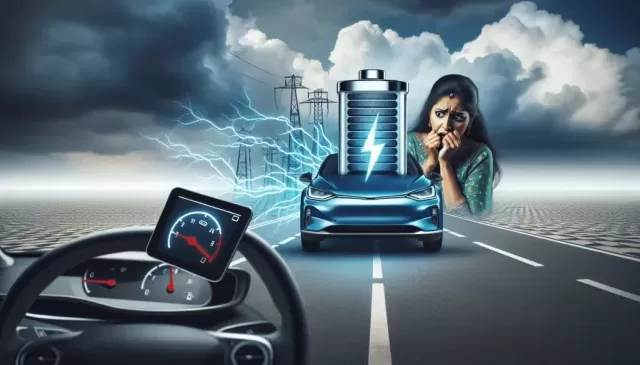
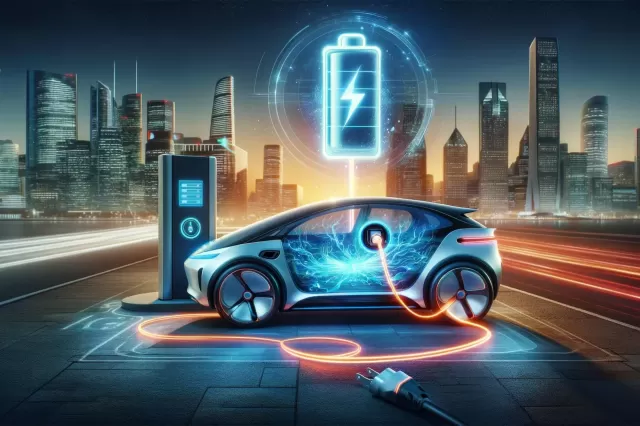
The journey towards widespread electric vehicle adoption often encounters a significant hurdle: range anxiety. The common perception has been that more range equates to larger batteries, providing a greater buffer between charging stops. However, a different perspective is emerging, one championed by automotive pioneers like Mercedes-Benz. Their view posits that the ultimate solution isn't simply increasing battery size, but rather dramatically enhancing charging speed.
The Limitations of the "Bigger Battery" Approach
While adding more kilowatt-hours to an electric vehicle's battery pack undeniably extends its driving range, this strategy comes with a notable set of compromises. These drawbacks extend beyond mere inconvenience, impacting cost, vehicle dynamics, infrastructure, and even safety.
- Increased Weight: A larger battery translates directly into a heavier vehicle. This added mass affects everything from acceleration and handling to tire wear and energy consumption. For instance, a heavy-duty electric pickup might carry a battery pack contributing significantly to its overall weight, potentially making it nearly 50% heavier than its internal combustion counterpart. This substantial weight can strain road infrastructure, leading to increased wear and tear on public roadways.
- Elevated Cost: Battery cells are among the most expensive components in an EV. Escalating battery capacity directly correlates with a higher retail price for the vehicle, potentially making advanced EVs less accessible to a broader consumer base.
- Space Constraints: Larger battery packs demand more physical space within the vehicle chassis, potentially impinging on passenger room, cargo capacity, or design flexibility.
- Safety Implications: The sheer mass of exceptionally heavy EVs presents a greater kinetic energy in the event of a collision. This increased force can lead to more severe damage to other vehicles and heighten the risk of serious injuries or fatalities for occupants of lighter vehicles involved in an accident.
- Charging Time Paradox: Ironically, while a bigger battery offers more range, it also typically requires a longer time to replenish its energy, even with powerful chargers. What takes minutes at a gas pump can stretch into half an hour or more for a high-capacity EV, even on a cutting-edge fast charger. This disparity can still be a source of anxiety for drivers accustomed to rapid refueling.
Mercedes-Benz's Strategic Pivot: Embracing Rapid Recharging
Recognizing these inherent limitations, Mercedes-Benz engineers are shifting their focus. Their extensive work with advanced battery management and vehicle efficiency, exemplified by groundbreaking concepts like the Vision EQXX (which achieved an astonishing 747 miles on a single 100-kWh charge from Stuttgart to Silverstone), laid the groundwork. This exploration reinforced that efficiency and smart management are crucial. Now, the emphasis is firmly on fast charging, combined with sophisticated thermal regulation, as the primary antidote to range anxiety. This strategy was vividly demonstrated by the Mercedes-AMG GT XX concept, which covered an astounding 25,000 miles in less than eight days, maintaining an average speed exceeding 137 mph – a feat made possible by rapid charging capabilities.
Introducing the ELF: The Experimental Charging Vehicle
To accelerate this charging revolution, Mercedes-Benz has developed a dedicated research platform: the Experimental-Lade-Fahrzeug (ELF), which translates to "Experimental Charging Vehicle." As a mobile laboratory, the ELF is designed to rigorously test and understand the boundaries of current and future fast-charging technologies.
Malte Sievers, a development engineer at Mercedes-Benz, articulates the ELF's mission: "To engineer the fastest-charging vehicle, we must thoroughly comprehend the current state of charging infrastructure and anticipate its future evolution." The ELF is not just a testbed for a single technology but a comprehensive exploration of diverse charging paradigms.
The ELF's Advanced Charging Arsenal
The ELF is equipped with a sophisticated suite of charging systems, allowing for unparalleled research into high-power energy transfer and battery resilience.
| Charging System | Key Capabilities |
|---|---|
| MCS (Megawatt Charging System) | Supports charging rates exceeding 1,000 kW (1 megawatt). Critical for testing the thermal resilience of batteries, power electronics, and charging cables under extreme conditions. |
| Enhanced CCS (Combined Charging System) | Achieves charging rates up to 900 kW. Theoretically, this could add 100 kWh of energy in just 10 minutes, potentially extending a vehicle's range by hundreds of miles in a brief stop. |
| Inductive Charging | Tests various power levels and efficiencies for future hands-free charging solutions. |
| Bidirectional Charging | Facilitates vehicle-to-home (V2H), vehicle-to-building (V2B), and vehicle-to-grid (V2G) applications. Positions EVs as mobile energy storage units, enhancing grid stability and energy independence. |
The MCS integration within the ELF serves as a rigorous research instrument, allowing engineers to probe the thermal limits and overall performance of high-voltage battery packs, power electronics, and charging cables under the most demanding conditions. The enhanced CCS system, boasting capabilities up to 900 kW, demonstrates the potential for rapid energy replenishment. To put this in perspective, adding 100 kWh of energy in merely 10 minutes could provide a significant boost in range for many EVs, assuming their internal architecture can accommodate such power.
From Laboratory Insights to Production Reality
Crucially, the technologies being refined within the ELF are not distant concepts but are on a rapid path to commercial implementation. Mercedes-Benz confirms that key components of the ELF's fast-charging CCS setup, including advanced battery and charging control software and hardware, are nearing production readiness. These innovations are slated for integration into forthcoming Mercedes-Benz models.
A tangible example of this progression is the HYC1000 CCS charger prototype, developed in collaboration with European charging specialist Alpitronic. This charger, instrumental in the AMG GT XX's record-breaking run, merges elements of truck-compatible megawatt chargers with liquid-cooled CCS components, including the cable and connector, allowing it to transmit currents up to 1,000 amps. During the Nardo record run, it enabled the AMG GT XX to receive peak charge rates of an astonishing 1,041 kW, with an average rate of 850 kW.
Mercedes-Benz Mobility charging parks are set to begin installing a production-ready version of the HYC1000 in 2026. This commercial variant will deliver peak charge rates of up to 600 kW for select Mercedes vehicles equipped with an 800V electrical architecture and advanced battery management systems. This represents a monumental leap forward in consumer-facing charging speeds.
The Future of EV Mobility: Faster, Lighter, Smarter
Malte Sievers succinctly captures the evolving philosophy: "Our mindset was previously centered on addressing range anxiety through battery size. Now, the entire electric vehicle sector is keenly focused on fast charging. I anticipate this trend will only intensify, leading to an increasing prevalence of ultra-rapid charging options."
This shift signifies a maturation of the electric vehicle market. Instead of compensating for longer charging times with excessive battery capacity, the industry is moving towards a model where EVs can be lighter, more agile, and more cost-effective, while still providing practical utility through quick, convenient energy replenishment. This paradigm shift holds the promise of making electric vehicles an even more compelling and seamless choice for drivers worldwide, truly curing range anxiety not with bulk, but with speed.