Volvo EX30: Electric SUV Identity Crisis
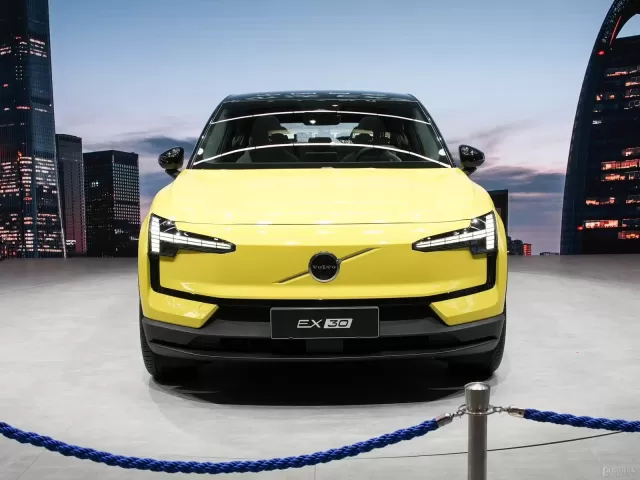
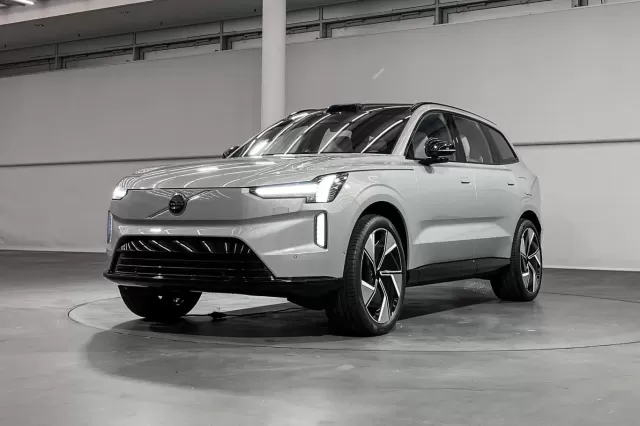
The Volvo EX30, a vehicle initially conceived with a wallet-friendly $35,000 price tag, finds itself in an identity crisis. A shift in EV incentive programs led Volvo to reprice the EX30, launching a performance-focused dual-motor variant at a much higher $47,895. Despite this premium positioning, echoes of its budget origins persist in its compact dimensions, respectable yet not groundbreaking range, and an amenity level that feels more aligned with its initial affordability. The EX30, in its current form, seems to be striving to emulate a Tesla, but even that aspiration falls short.
However, the EX30 redeems itself with an undeniably exhilarating driving experience. Its rapid acceleration, capable of a 0-60 mph sprint in a mere 3.2 seconds, combined with agile handling reminiscent of a hot hatchback, makes it a joy to pilot on winding roads. The ride quality is a pleasant surprise, offering a well-managed and comfortable experience, and it even demonstrated surprising capability on an off-road course, showcasing an eager and tenacious spirit.
The minimalist interior design is a highlight, especially the thoughtful integration of sustainable and recycled materials. These elements are artfully employed to create visually engaging patterns and textures, notably the fabric adorning the dashboard, which subtly mirrors the inviting cloth upholstery of the seats. The air vents are particularly striking, resembling intricate works of art, and the metal door handles exude a satisfying heft and quality.
The driver's interface, however, presents significant challenges. Volvo's decision to place all instrumentation on the central touchscreen, mirroring Tesla's approach, proves problematic. Unlike its competitors, Volvo has clustered crucial information into a narrow strip at the top of the screen, compromising readability. The speedometer, centrally located but largely out of the driver's direct line of sight, and the minuscule fonts used for other vital data, make quick glances difficult.
This design choice is exacerbated by the vehicle's overzealous driver monitoring system. Merely glancing at the instrument cluster can trigger a barrage of audible alerts and warnings, ostensibly to keep the driver focused on the road. Ironically, the visual feedback for these warnings also appears on the center screen, further diverting the driver's attention from their primary task. While critical of Tesla's designs, even the Model Y offers a more intuitive and less distracting way to monitor speed and cruise control status.
Further adding to the frustrations are the EX30's practical shortcomings. Cup holder availability is limited, and the containers themselves are diminutive. Storage space throughout the cabin is surprisingly sparse. The lane-keeping assist system, which relies on torque input rather than touch sensors, can be overly sensitive, issuing persistent prompts to keep hands on the wheel even when they are properly placed. The limited number of window switches, controlling all four windows, and the need to navigate menus and steering wheel controls for mirror adjustments, are cost-saving measures that detract from the user experience, echoing similar compromises found in the EX90. The rear seating area is notably cramped, with even average-height passengers likely to find their knees uncomfortably pressed against the front seatbacks.
As an electric vehicle, the EX30 also presents notable limitations. Its EPA-estimated range of 253 miles proved optimistic in real-world testing, with our Road-Trip Range Test yielding a disappointing 180 miles. Fast charging capabilities are capped at 153 kW, and this peak speed is maintained for a very brief period. A 15-minute charging session could only add approximately 87 miles, falling short of competitors like the Model Y AWD, which added 133 miles, and the Kia EV6, which managed 160 miles in the same timeframe.
Many of these criticisms can be traced back to the EX30's initial, more affordable target price. For a vehicle now commanding nearly $50,000, these compromises are difficult to overlook. Volvo has since introduced a less powerful, single-motor EX30 with an EPA range increase of only 8 miles, priced around $40,000. While this revised pricing alters the value proposition, it doesn't fundamentally resolve the vehicle's identity issues. Until Volvo clarifies the EX30's intended purpose and target market, it will likely struggle to stand out amongst the numerous capable electric SUVs already available.
This evaluation was part of our comprehensive 2026 SUV of the Year (SUVOTY) assessment, which scrutinizes vehicles across six key metrics: efficiency, design, safety, engineering excellence, value, and performance of intended function. Vehicles considered for this award must be either entirely new or have undergone significant revisions.