Porsche's Electric Cayenne: A Tech-Fueled Revolution
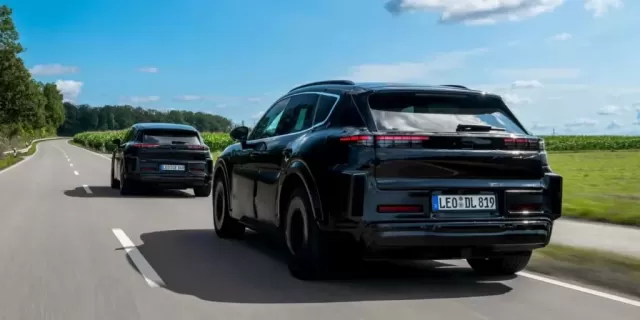
Porsche is electrifying its Cayenne SUV, and the advancements under the hood and inside the cabin are generating serious buzz. Following a sneak peek at the prototype's performance, we got an exclusive look at the technology powering this all-electric beast. Prepare for impressive horsepower figures and a host of cutting-edge features.
A Revolutionary Screen Design
The Cayenne's dashboard is dominated by screens, most notably a central display that curves at a 45-degree angle. This unique bend allows for a split-screen setup, ideal for side-scrolling menus, or a unified display. Porsche has kept certain features under wraps, including a 3D Cayenne model that users can manipulate to access various vehicle settings. Expect extensive customization options and "Mood Modes" that tailor the cabin environment, encompassing ambient lighting, seat positioning, massage functions, soundscapes, and climate control.
Replacing traditional handholds, a "Ferry Pad" (a wrist cushion) sits below the screen. Behind it lies a redesigned center console with adaptable storage, including a removable cupholder. However, air vent adjustments are now controlled via the touchscreen, a design choice likely to be controversial among drivers.
Enhanced Visibility and Intelligent Assistance
The 2027 Cayenne EV will feature an augmented reality head-up display, projecting navigation prompts and other crucial information onto the windshield. This system creates the illusion that these prompts are floating several feet ahead of the vehicle. In addition, Porsche is incorporating AI-powered voice assistant, which can remain active without requiring constant "wake-up" commands. The system is designed to handle complex, multi-faceted requests, such as locating top-rated vegetarian-friendly Italian restaurants along a specified route.
A panoramic sunroof with a segmented LCD blind offers superior heat protection. Seat massagers have also been upgraded with more air chambers and vibrating actuators. Upholstery options will include the "RaceTex" leather-free textile seen in other Porsche models.
Advanced Motor and Efficient Energy Management
While some Cayenne EV models will share motors with the electric Macan, the flagship version will boast a Porsche-engineered rear motor utilizing a specialized cooling system initially developed for the GT4 e-Performance racer. This oil-based system delivers cooling directly to the motor's copper windings, resulting in a more compact and efficient design compared to conventional water-jacket systems. This design minimizes energy waste and directs cooling where it's needed most.
Unlike the Taycan, the electric Cayenne will not use a two-speed transmission, thanks to advancements in motor technology. Regenerative braking is significantly enhanced, capable of harvesting substantial energy, allowing for the vast majority of braking to be handled by the regen system. However, Porsche is sticking with a traditional brake pedal setup, eschewing a one-pedal driving mode.
Sophisticated Suspension and Towing Capabilities
All-electric Cayennes will feature air suspension, and the Cayenne EV marks the debut of Porsche Active Ride suspension in an SUV. This innovative system employs a high-voltage motor pump connected to each damper, actively adjusting shock absorption to maintain a level body, regardless of road conditions or terrain.
Impressively, the electric Cayenne boasts a 7,700-pound towing capacity. Porsche Active Ride suspension is essential here, calculating trailer weight and adjusting damper stiffness accordingly. Optional rear-wheel steering enhances maneuverability at low speeds and increases stability at higher speeds.
Charging Innovation and Wireless Convenience
The 2027 Cayenne EV's battery pack, utilizing fewer but larger cells, increases energy density. Porsche has prioritized fast DC charging, with the Cayenne capable of accepting power at speeds. This translates to adding a substantial amount of range in just a few minutes, and charging from 10 to 80 percent state of charge in a very short timeframe. While compatible with Tesla's NACS ports, charging speeds at Superchargers will be limited.
One of the most intriguing options is a wireless charging pad for the Cayenne. Using inductive charging technology, the Cayenne can recharge wirelessly, with the suspension automatically lowering itself for optimal contact. The system includes safety measures to prevent charging if obstructions are detected. Porsche will offer varying levels of wireless charging readiness, with non-prepped vehicles likely ineligible for future upgrades.
The Future is Electric
The electric Cayenne promises both performance and technological innovation. With its arrival in dealerships expected by the middle of next year, anticipation is building.