Honda's 2027 Midsize Overhaul: Lighter, Hybrid Future
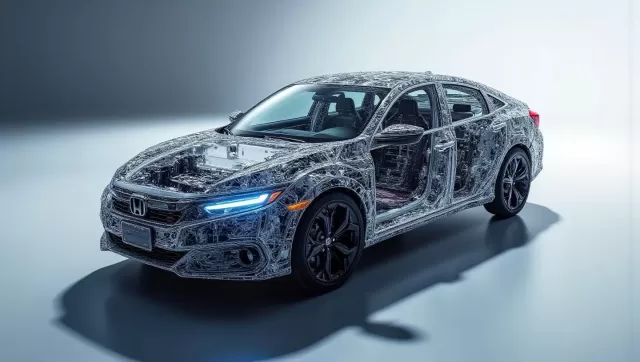
Honda is gearing up for a significant overhaul of its popular midsize lineup, with a new platform and an advanced fifth-generation hybrid system set to debut in 2027. This comprehensive update will impact key models like the Civic, CR-V, Accord, and the anticipated Prelude, promising lighter, more refined, and more efficient vehicles.
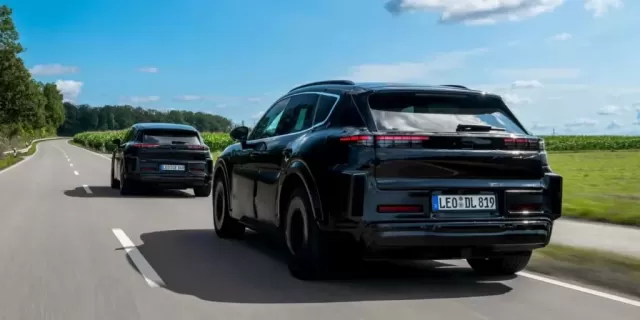
Early insights into this future were gained through a brief drive of a camouflaged prototype, believed to be the next-generation Civic. Despite the disguise, a prominent new gearshift mounted on the steering column offered a tangible glimpse of the evolving design.
A Lighter, Stiffer Foundation
The forthcoming midsize platform is engineered to shed nearly 200 pounds, benefiting from an all-new, more rigid body structure. This enhanced rigidity is crucial for minimizing noise, vibration, and harshness (NVH), creating a more serene cabin experience. While some components will carry over, the platform itself represents a fresh start. Honda has also meticulously revised the suspension geometry for improved performance, integrating a new Motion Management System with advanced pitch control. This system aims to deliver greater stability, smoother corner entry, and enhanced stability through sweeping curves.
Next-Generation Hybrid Powertrain
Building upon the success of the current Civic Hybrid, Honda's fifth-generation hybrid system represents an evolutionary leap. It features a new 2.0-liter engine paired with a compact transmission, a high-output motor, and an optimized control unit for the front-wheel-drive configuration. The next-generation battery will reside under the rear seats, offering a 10% increase in range.
The new engine, expected to utilize the Atkinson cycle, will deliver comparable specifications to the current 2.0-liter I-4 but with a focus on reduced noise and improved efficiency, directly contributing to the extended driving range. Its integrated cooling system facilitates rapid combustion for enhanced output. Notably, this new engine is not turbocharged, aligning with Honda's foresight on future emissions regulations which are expected to phase out turbos by 2030. Honda anticipates this new four-cylinder hybrid system will continue to lead the segment in performance.
During a short test drive, acceleration proved both swift and remarkably smooth. The transition between EV, hybrid, and engine-driven modes was seamless. A key new feature for these hybrids is Honda S+ Shift, a system that simulates gear shifting sensations and sounds. This technology debuted in the 2026 Honda Prelude and will soon be available in U.S. showrooms. During the prototype drive, drivers experienced crisp, responsive upshifts and downshifts, occurring automatically during acceleration and braking, accompanied by realistic auditory cues.
Innovative Body Dynamics and Refined Ride
An intriguing aspect of the new midsize platform is its innovative approach to body flex during cornering. The chassis is designed to deform subtly, allowing the tires to maintain greater contact with the road surface. This engineering contributes to enhanced stability, and although extensive testing wasn't possible, the prototype demonstrated confident handling, even when pushed to the limits of tire grip.
Echoing the refined steering of the current Civic and the new Prelude, the prototype exhibited excellent steering response, with precise execution of driver inputs. The powertrain and braking systems are seamlessly integrated and operate in concert with steering inputs, ensuring smooth and controlled entry into corners.
The revamped suspension system is also engineered to further reduce road noise and vibration. Some suspension mounting points have been repositioned to redirect noise away from the cabin, complemented by increased sound deadening. While the test drive was conducted on exceptionally smooth pavement, the interior remained remarkably quiet.
Enhanced Safety and Advanced Driver Assistance
The upcoming generation of Honda vehicles is expected to achieve top-tier safety ratings. A significant addition is a new cushion airbag situated at the bottom of the seat, beneath the thighs, designed to protect the pelvis – a first for Honda. Furthermore, Honda will introduce its next-generation automated driving system in 2027, initially on its electric and hybrid vehicles. This advanced system is currently undergoing testing on U.S. roads.
While a comprehensive evaluation is not yet possible due to limited seat time, the prototype's driving dynamics closely mirrored the accomplished feel of today's Civic Hybrid. This is particularly noteworthy given that the current Civic Hybrid is a well-established production vehicle in its second model year, whereas the prototype is considered an early "hybrid study" by Honda. This indicates ample time for further refinement, suggesting that the final production models will only improve upon this promising foundation.