Waymo's Zeekr RT: A Clean Vision of the Future
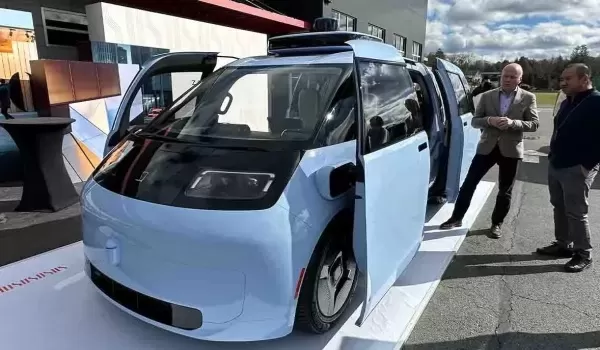
The landscape of urban transportation is undergoing a profound transformation, with autonomous vehicles increasingly becoming a tangible part of daily life. In bustling metropolises like Los Angeles, the presence of self-driving cars, particularly those operated by Waymo, is now a familiar sight. While the distinctive Jaguar I-Pace SUVs have long dominated their fleet, a significant new addition signals an exciting evolution in autonomous mobility: the Zeekr RT. This innovative all-electric van represents not just an expansion of Waymo's fleet but also a fascinating case study in the meticulous engineering required for truly autonomous operations.
The Zeekr RT: A Dedicated Platform for Autonomous Ride-Hailing
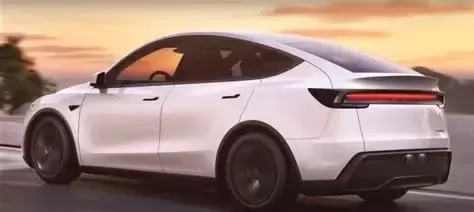
Emerging from the formidable Geely automotive empire, which also counts Volvo among its prestigious brands, Zeekr has carved out a niche in advanced electric vehicles. The Zeekr RT, however, stands apart. This compact, all-electric van is purpose-built and exclusively manufactured for Waymo, underscoring a deep collaborative effort. While it may share fundamental underpinnings with other Chinese-produced electric passenger vans, its design and function are entirely geared towards autonomous ride-hailing. Waymo provides the sophisticated hardware, cutting-edge software, and essential infrastructure, while Zeekr meticulously crafts the vehicle itself. This strategic partnership highlights a globalized approach to developing the next generation of transportation, positioning the Zeekr RT to potentially become one of the most visible vehicles from a Chinese brand on American roads. Its impending deployment in Waymo's services signifies a pivotal moment for both companies and the broader autonomous vehicle industry.
The Criticality of Perception: Sensors at the Forefront
At the heart of any autonomous vehicle's capability lies its array of sensors. These technological eyes and ears – including cameras, radar, and lidar – are strategically integrated into the vehicle's exterior, often housed in conspicuous pods. These sensors are not merely observational tools; they are the primary means by which a robotaxi perceives, understands, and navigates its environment. Their ability to gather accurate data is paramount, directly influencing the vehicle's decision-making process and, consequently, its safety and reliability.
However, the effectiveness of these advanced sensors is critically dependent on their clarity. Any obstruction – be it rain, fog, dust, grime, or even the remnants of an unfortunate insect collision – can compromise their vision. This challenge, often overlooked by the casual observer, is one of the most fundamental hurdles autonomous vehicle developers must overcome. Ensuring these "eyes" remain unclouded in all driving conditions is not just about convenience; it's a non-negotiable requirement for safe and consistent autonomous operation.
An Unconventional Solution: The Zeekr RT's Micro-Wipers
Upon closer inspection, the Zeekr RT reveals an ingenious and rather endearing solution to the sensor cleanliness dilemma: a series of tiny, specialized wipers. These aren't the familiar blades that sweep across a car's windshield; instead, they are miniature versions, often no more than three inches in length, specifically designed for the small glass panels protecting the vehicle's optical sensors. Each of these compact wipers operates precisely as its larger counterpart would, sweeping back and forth across a semicircular area to maintain a pristine view for the sensor beneath. Furthermore, each miniature wiper is paired with its own dedicated washer fluid spray nozzle, ensuring comprehensive cleaning action.
The sheer quantity of these micro-wipers is striking. The Zeekr RT boasts eight such units: four strategically positioned on the roof to cover crucial overhead sensors, and one at the corner above each of the four wheels, likely for perimeter awareness. When considering the two full-size conventional wipers for the main windshield, the Zeekr RT could very well lay claim to being one of the most wiper-equipped vehicles ever manufactured. Although it notably lacks a rear windshield wiper, this innovative approach to sensor hygiene underscores the profound differences in engineering priorities between human-driven and autonomous vehicles.
Autonomous Cleaning: A Deep Dive into Waymo's Strategy
Waymo's insights illuminate the profound engineering philosophy behind these tiny wipers. The company emphasizes that "clean windows allow for significantly better vision capability in rain, fog, snow, and scenes with poor lighting conditions like looking into headlights or the sun." The wipers' explicit purpose is to "keep our camera windows clean from foulants like grime, organics (bugs), and even snow." This statement highlights the diverse array of environmental challenges autonomous vehicles must conquer.
What truly sets Waymo's approach apart is its commitment to an "autonomous hygiene" system. Unlike a human driver who might manually clean a dirty windshield or a smudged camera lens, a robotaxi must manage this critical task without human intervention. Waymo has developed a "comprehensive automated onboard cleaning system" coupled with a "robust cleaning policy." This sophisticated system is capable of autonomously detecting when and how to clean its sensors, dictating the precise conditions under which cleaning should occur. This means the vehicle itself monitors sensor clarity and initiates cleaning cycles as needed, ensuring uninterrupted operational integrity.
The stark contrast between human and autonomous vehicle cleaning protocols is illustrative:
| Aspect | Human-Driven Vehicle Cleaning | Autonomous Vehicle Sensor Cleaning |
|---|---|---|
| Initiation | Driver's discretion, aesthetic-driven | Automated detection, policy-driven |
| Target Surfaces | Windshield, mirrors, bodywork | Critical optical sensors, lidar, radar |
| Primary Motivation | Driver visibility, aesthetics | Operational integrity, safety, reliability |
| Consequence of Neglect | Reduced driver visibility, reduced aesthetic appeal | Impaired perception, safety hazard, operational failure |
| Intervention Method | Manual wiping, car wash | Automated, onboard system, precise application |
Engineering Ingenuity: The Single Reservoir Challenge
Another fascinating detail revealed by Waymo is the architectural elegance beneath the Zeekr RT's skin. All the vehicle's numerous washer fluid spray nozzles, spanning both the full-size windshield wipers and the eight miniature sensor wipers, draw from a single central reservoir. This design choice, while seemingly minor, points to a significant feat of engineering. It necessitates a complex network of ducting and fluid lines meticulously integrated throughout the vehicle's structure to deliver washing fluid precisely where and when it's needed for each sensor and the main windshield. This centralized system likely optimizes fluid management, reduces weight, and simplifies maintenance, but it comes at the cost of intricate internal design.
Wiping Towards a Safer, Smarter Future
The Zeekr RT's tiny wipers are more than just a quirky design feature; they are a microcosm of the profound engineering challenges and innovative solutions propelling the autonomous vehicle industry forward. These seemingly small details underscore the immense complexity involved in transforming vehicles into truly self-driving entities. Ensuring perpetual clarity for an array of sensors in dynamic, unpredictable environments is not a trivial concern; it is fundamental to the safety, reliability, and ultimate public acceptance of robotaxis.
The emphasis Waymo places on an autonomous cleaning system reflects a broader philosophy within the AV sector: every potential point of failure must be addressed with an intelligent, automated solution. From managing sensor contamination to navigating adverse weather, the path to widespread autonomous deployment is paved with such meticulous problem-solving. As Waymo's Zeekr RTs become more prevalent, these "cute" little wipers will silently perform their crucial duty, contributing to the seamless and safe operation of the robotaxi service. They are a tangible reminder that the future of mobility isn't just about groundbreaking algorithms and powerful processors; it's also about the ingenious, often overlooked, mechanical innovations that keep the complex systems functioning flawlessly.